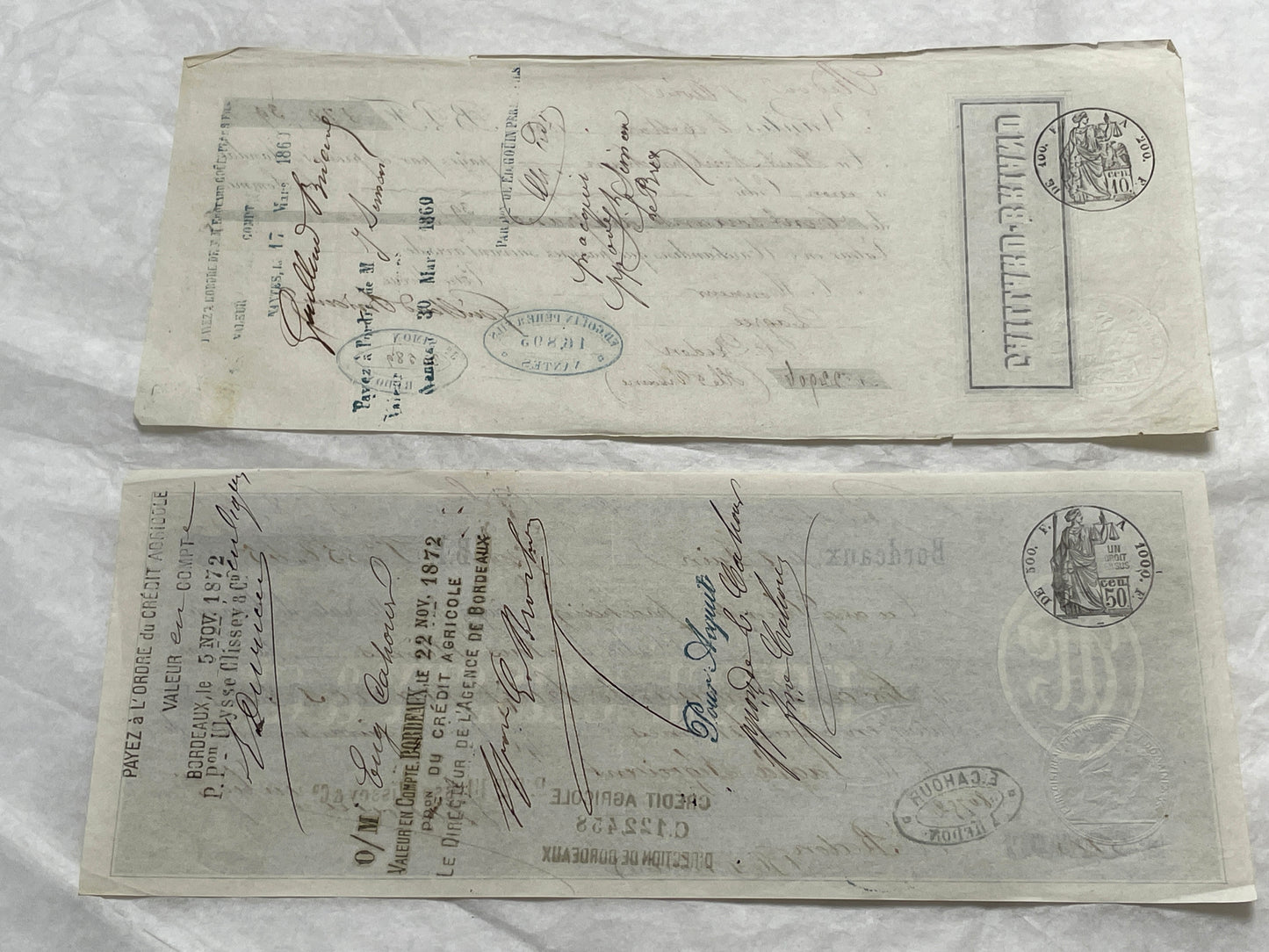


Mid 19th Century - French Bills of Exchange - Set of 6 Historical Letters
Mid 19th Century - French Bills of Exchange - Set of 6 Historical Letters
Sold
Taxes included.
Shipping calculated at checkout.
🕰️ Vintage from the Mid 19th century
🤍 Handpicked by Vincent
📐 Dimensions: 20x9 cm (7.9x3.5 in)
📦 Carefully packed and shipped worldwide
🔒 Secure Shopify checkout · Credit cards, Apple Pay, Shop Pay, PayPal
🧾 Shipping & returns details
ℹ️ Shipping costs depend on destination and weight and are always shown clearly before payment.
Couldn't load pickup availability
This unique set presents six Mid 19th Century French exchange letters, offering a glimpse into historical financial practices. These authentic documents, written in French, are a significant key for collectors of vintage paper ephemera. Each letter, dating from the 1860s and early 1870s, originates from various French cities such as Nantes, Bordeaux, and Lille, showcasing intricate handwritten calligraphy and period-specific stamps.
Exchange letters, also known as bills of exchange, were fundamental financial instruments during the 19th century. They functioned as written orders for a specified sum of money to be paid to a third party on a future date, facilitating commercial transactions across distances without the need to transport physical currency. They were essential tools for merchants and businesses in managing trade and credit. For example, one letter states: 'Nantes, le 24 Fevrier 1860. Au vingt quatre Mars prochain, payez par ce present mandat...' (Nantes, February 24, 1860. On the twenty-fourth of next March, pay by this present mandate...). These pieces provide tangible links to the economic history of France.
Exchange letters, also known as bills of exchange, were fundamental financial instruments during the 19th century. They functioned as written orders for a specified sum of money to be paid to a third party on a future date, facilitating commercial transactions across distances without the need to transport physical currency. They were essential tools for merchants and businesses in managing trade and credit. For example, one letter states: 'Nantes, le 24 Fevrier 1860. Au vingt quatre Mars prochain, payez par ce present mandat...' (Nantes, February 24, 1860. On the twenty-fourth of next March, pay by this present mandate...). These pieces provide tangible links to the economic history of France.
Explore more from our antique documents collection .
💬 Questions before or after purchase? We’re always happy to help.